1-844-934-2360 | rousseauslanding@outlook.com

Bear Hunt FAQ
Common questions from hunters planning a Black Bear hunt from Rousseau’s Landing in Northwestern Ontario.
➢ Check our Fall Bear Hunt Package for prices and availability.
Ontario Bear Hunt Questions Answered
Answers to common bear hunting questions at Rousseau’s Landing near Ignace, Ontario. Licensing, baiting, success rates, what to bring, trophy care, and booking your fall black bear hunt.
Get The FAQ


Trophy Potential
What are the biggest trophy bears taken?
The area around our lodge has produced some truly exceptional black bears. A 650-pound bear was harvested just minutes from our property — this hunt of a lifetime was one of the largest black bears ever taken in Canada. That gives you an idea of the genetics in this part of Northwestern Ontario.
In our own camps, we've seen bears well above the Ontario average of 180 pounds. Recent harvests from our stands have included bears over 200, 220, in the 250 range, and one at 285 pounds. Every one of those was above the provincial average.
With lighter hunting pressure in recent years across our Wildlife Management Units, the bears in our territory have had more time to grow. That means the potential for a true trophy-class bear is as strong as it's been in years.
Are color phase bears common in this part of Ontario?
Black bears in Northwestern Ontario are not always black. Color phase bears — including chocolate, cinnamon, and blonde — do show up in our area. They're not as common as the standard black-phase bears, but they're out there, and they can appear at any bait site during the season.
We can't guarantee you'll see a color phase bear on your hunt, but the opportunity exists. When our guides are monitoring trail cameras during baiting season, color phase bears do show up from time to time. If that's a priority for your trip, let us know when you book and we'll keep it in mind when assigning your stand.
Last reviewed: 2026-03-02What is the bear population density like in Northwestern Ontario?
Northwestern Ontario has one of the healthiest black bear populations in North America. Ontario's overall bear population is estimated at over 85,000 animals, and a significant portion of that is concentrated in the boreal forests of the northwest — which is exactly where we are.
Our lodge sits near Ignace in the heart of Sunset Country, surrounded by thousands of square kilometres of prime bear habitat. Dense boreal forest, abundant natural food sources, and relatively low human population all contribute to strong bear numbers in this region.
On top of that, hunting pressure in our specific Wildlife Management Units has been lighter in recent years. That means bears have been growing and reproducing with less disturbance, which translates to a healthy population with good numbers of mature animals.
Learn more about our multi-zone hunting advantage on our Bear Hunting Information page.
Do you have low pressure areas where mature bears have had time to grow?
Yes — and this is one of the biggest advantages of hunting from our camp. We have access to four Wildlife Management Units (WMU 15, 15A, 12, and 13) from a single basecamp. That's a lot of territory, and not all of it gets the same level of hunting pressure.
After a dip in bear hunting activity over the past few years, some of our zones have seen very light pressure. That means mature boars have had time to put on size without being harvested. Our guides are seeing the evidence of that on trail cameras during baiting season — bigger bears showing up at sites that were lightly hunted in previous years.
When you book with us, we work with you to match you to the stand and the zone that gives you the best shot at a quality bear based on current activity.
See how our multi-zone strategy works.
Last reviewed: 2026-03-02Do you have Bear Management Areas with proven 400-pound-plus boars?
We don't use the BMA system — that's an older term some outfitters still reference. What we do have is access to four Wildlife Management Units (WMU 15, 15A, 12, and 13) with pre-baited, active stands monitored throughout the season.
Have we seen 400-pound-plus bears? The area has absolutely produced them. A 650-pound bear was taken just minutes from our property, and that kind of genetics doesn't come from nowhere. Our own recent harvests have consistently been above the provincial average, with bears in the 200- to 285-pound range.
We can't promise a 400-pounder — nobody can do that because the bears are wild. But the conditions for trophy-class bears are strong in our territory: healthy population, reduced pressure in recent years, and active bait sites producing consistent bear activity.
Last reviewed: 2026-03-02How managed are the bear populations in your hunting areas for trophy quality?
Bear populations in Ontario are managed by the Ministry of Natural Resources and Forestry through the Wildlife Management Unit system. Each WMU has harvest quotas and tag allocations based on population surveys, and outfitters like us are allocated tags within those zones.
From our end, we manage for quality by maintaining a strong network of pre-baited sites across multiple WMUs. Our guides monitor trail cameras to track which bears are using which sites, and we use that information to match hunters to stands based on what they're looking for.
Last reviewed: 2026-03-02Hunt Options
Do you offer archery-only options for trophy bear hunts?
Absolutely. We accommodate both archery and rifle hunters, and we set up stands specifically for each weapon type. When you book and tell us you're coming with a bow, we'll assign you a stand that's positioned for an archery shot — closer to the bait with good shooting lanes.
Archery hunters and rifle hunters are never placed at the same stand. The setups are different because the shot distances are different, and we want every hunter to have the best possible opportunity based on their weapon.
Fall bear season runs mid-August through September, and that window works well for bowhunters. The bears are actively feeding, the weather is warm enough for comfortable sits, and the evening hunt timing gives you long, productive sits before dark.
If you have questions about stand types or shot distances for archery, give us a call. We'll walk you through everything before you arrive.
Last reviewed: 2026-03-02What are the best dates in fall for peak trophy bear activity?
Fall bear season in our area runs from mid-August through September, and that entire window is productive. That said, there are patterns worth knowing.
The peak feeding period tends to be late August through mid-September. This is when bears are most aggressively putting on weight before winter, and they're visiting bait sites consistently and predictably. Evening sits during this window often produce the most activity.
Early in the season — mid to late August — the bears are active but the days are longer, giving you more time on stand in the evening. As September rolls on, the days shorten and temperatures start to cool. Bears are still feeding hard, but they may shift their timing slightly.
By late September into early October, bear activity at bait sites can slow down. Bears start getting sluggish and don't travel as far. They're still around, but they're not hitting sites as frequently.
Our recommendation: book in the late August to mid-September window for the best combination of bear activity, weather, and daylight. The best dates go fast, so plan ahead.
Last reviewed: 2026-03-02What are the options for taxidermy and shipping for big bears?
After your harvest, our guides will help you track and retrieve your bear and transport it back to the lodge. Field dressing is the hunter's responsibility, but we provide walk-in cooler and freezer access so your meat and hide stay in top condition until you're ready to leave.
For meat processing, there's a butcher in Ignace — just a five-minute drive from camp — who can handle cutting and wrapping. There are also a few other experienced locals who can help with processing if you prefer.
For taxidermy, we can point you toward local options and help coordinate what you need. Many hunters choose to cape their bear at camp and transport the hide home for their own taxidermist. If you're crossing the border back into the U.S., you'll need the proper export permits — we can help guide you through that process.
The key thing to plan for: bring coolers and game bags for meat transport. Since you're driving to camp, there are no weight limits on what you bring home.
For a full list of what's included in your package vs. what's extra, see our Bear Hunt Package page.
Last reviewed: 2026-03-02Can I see bait site photos or trail camera video from your specific bear stands?
We start baiting our sites well before hunting season opens, and we do run trail cameras to monitor bear activity at each stand. That camera footage is how our guides know which sites are active, what size of bears are visiting, and how to best assign hunters to stands.
That said, we're careful about what we share publicly. Here's why: if we show you a big bear on a specific camera, that creates an expectation that you'll be hunting that exact bear at that exact stand. Bears don't work that way. They travel 10 to 20 kilometres in a day, and a big boar can push smaller bears off a site and move on the next day. Another good-sized bear might replace it within 24 hours.
What we can tell you is this: every hunter is guaranteed an active stand with consistent bear activity. When you arrive at camp, your guides will walk you through what they've been seeing and help you choose your setup with confidence.
We do plan to share some trail camera updates on our website and our page on Facebook as baiting season gets underway.
Sign up for our email list so you don't miss those updates when they go live.
Last reviewed: 2026-03-02Fall Bear Hunt
When is the best time to hunt black bear in Ontario?
Great question — and it depends a little on what matters most to you.
For us here at Rousseau's Landing, our fall bear hunt runs from mid-August through September, and honestly, that's the sweet spot. The bears are actively feeding to build up fat reserves before winter, so they're hitting bait sites consistently and predictably. You get bigger bears in the fall because they're filling up. August through the end of September is when we see the most activity at our stands.
Some outfitters up here do offer spring hunts — typically May into June. The bears come out leaner after hibernation, but I'm told their fur tends to be shinier if that's what you're after. We don't run a spring hunt ourselves, but if you're interested in the meat, the size, and consistent bait site activity, the fall is where it's at.
The late-summer timing is really nice too. Warm days, cooling evenings, and those long twilight hours keep the bears moving right up until dark. And because the hunts are in the evening, your mornings are wide open for fishing on Sandbar Lake — so a lot of our guys turn it into a combination trip.
Have you ever done a fall hunt up in this part of Ontario before, or would this be your first time up here?
Last reviewed: 2026-03-02What is a guided bear hunt like in Canada?
So the way it works here at Rousseau's Landing — and every outfitter handles this a little differently — our standard package is what we call semi-guided.
On your first day, our guides take you out to your assigned stand, show you the access routes, go over shot placement, and make sure you're comfortable and oriented. After that first day, you head out to your stand on your own each evening while our guides maintain the bait stations daily and stay available if you need anything.
The hunts are evening hunts. You get positioned about two to three hours before sunset — that's when the bears are most active at the bait sites. We actually use trail cameras to track what time of day specific bears are showing up, so when you arrive, we can give you a heads-up about what to expect at your particular stand.
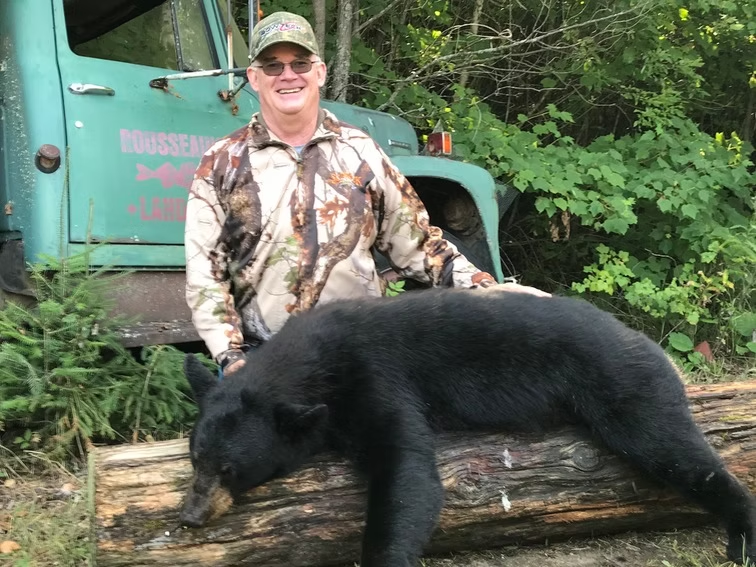
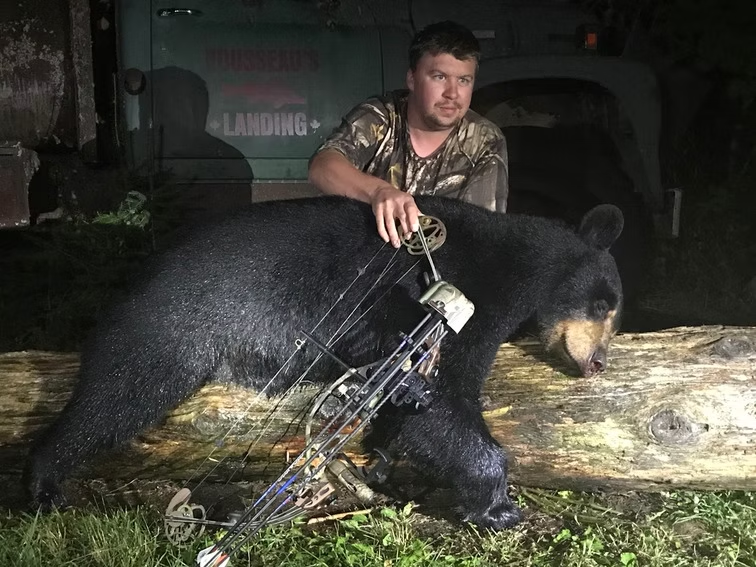
If you get a bear, you text us "bear down," and we come out, help you with tracking and retrieval, and bring everything back to camp. Then there's the celebration — everyone gets their picture taken in front of the old Rousseau's Landing truck — it's a tradition.
Your mornings are completely free. Most of our bear hunters spend that time fishing walleye and pike on Sandbar Lake. It's not a sit-in-camp-and-wait kind of experience. You're actively involved, but you've got experienced support behind you the whole time.
Is this something you're thinking about for yourself, or are you looking at putting a group trip together?
Last reviewed: 2026-03-02Is bear hunting in Canada legal for U.S. residents?
Absolutely, yes. Ontario welcomes non-resident hunters from the United States every year — it's a big part of the outdoor tourism economy up here, and the process is pretty straightforward.
As an American hunter, you'll need a few documents: a valid U.S. passport for the border crossing, an Ontario Outdoors Card (that's about eight or nine dollars Canadian and it's valid for three years), and a Non-Resident Black Bear License, which runs around $240 Canadian. You'll also need to show proof of hunter education — either a valid hunting license from your home state or a hunter safety certificate.
If you're bringing a firearm across the border, you'll fill out what's called a Non-Resident Firearms Declaration — that's the RCMP Form 5589. It's a simple form, and we can walk you through the whole process before you head up.
Most of our American guests cross at International Falls, Minnesota into Fort Frances, Ontario, and then it's a drive east to Ignace. The whole trip from the border to our camp is less than four hours, and the border agents are very used to seeing hunters and anglers coming through. Just be honest and straightforward with them — they deal with trips like ours every day.
Where would you be driving up from? I can help you figure out the best route and border crossing.
Last reviewed: 2026-03-02How does baited bear hunting work?
This is one of the most common questions we get, and I'm glad you asked because the baiting is really the foundation of a successful hunt up here.
The way it works at Rousseau's Landing is that we start establishing and maintaining bait sites well in advance of when our hunters arrive. In the early weeks, we're going out every two or three days to set bait and get the bears patterned. As we get closer to August and the hunting season, we ramp that up to every single day.
What we feed the bears actually changes over the course of the summer because their diet shifts as the season progresses. Kyle, who handles a lot of our bear program, knows the details on that better than anyone.
We also run trail cameras at the sites. That's how we know which stands are active, what size bears are coming through, and what time of day they're showing up. When you arrive for your hunt, we can tell you what's been happening at your specific stand.
Every hunter gets their own dedicated, active stand — that's guaranteed. The stands are positioned based on whether you're hunting with a rifle or a bow, and your shooting preference. Then each evening, you head out to your stand with the day's bait, set it out, get settled, and wait. The bears are creatures of habit once they've been patterned on a site. It's exciting, and it works.
Are you leaning toward rifle or archery? That affects how we'd set up your stand.
Last reviewed: 2026-03-02What gear do you need for a bear hunt?
The hunters who come up here tend to be pretty experienced, and most of them show up well-prepared. But here's what I'd put on the list:
For the hunt itself — your weapon and ammunition or arrows, obviously. Hunter orange vest and hat are required by Ontario law when you're traveling to and from your stand. Camo or earth-tone clothing for the sit. Scent control products, because bears have an incredible nose. Bug repellent or a ThermaCELL — in August, you'll want something. Waterproof boots and rain gear, because the weather can change. Warm layers for the evenings — once the sun starts going down, temperatures can drop. A headlamp or flashlight for walking out after dark. And a safety harness if you're in a tree stand.
For after the harvest — coolers and game bags for transporting meat home. We've got a large walk-in freezer at camp, so we can keep everything cold and in great shape until you head out.
For documents — don't leave home without your passport, your Ontario Outdoors Card, your Non-Resident Bear License, proof of hunter education, and the RCMP Firearms Declaration if you're bringing a gun across the border.
And because we're a housekeeping lodge, bring all your own food and beverages for the week. Ignace is just a five-minute drive and has grocery stores, an LCBO, and everything you'd need. One thing people sometimes forget — bring your own bath towels and pillows, or let us know in advance and we can set up bedding for you.
Is there anything specific about the setup that you're curious about? I'm happy to walk through the details.
Last reviewed: 2026-03-02Are black bears dangerous to hunt?
That's a smart question to ask, and I'd say the real answer is — you should always respect what you're hunting, but if you know what you're doing and follow basic safety practices, it's a very manageable hunt.
Bears by nature tend to avoid people. If they hear noise, they stay away. That's actually why the evening sit hunts work so well — you get quiet, you let the bear come to the bait on its own terms. Most of the hunters who come up here are experienced and know the drill.
That said, you should always carry appropriate safety gear. Bear spray is a good idea. An air horn works well too — usually that's enough to scare one off if needed. And obviously, you've got your weapon with you.
The way we set it up at Rousseau's Landing, you know which stand you're going to, our trail cameras have shown you what's been coming through, and the guides are available if anything comes up. It's not a walk-through-the-bush-and-hope-you-find-something kind of hunt. You're in a known location with a predictable pattern.
Have you done any bear hunting before, or would this be your first experience with it?
Last reviewed: 2026-03-02What should I expect from a Canadian bear hunting adventure?
I love this question because it lets me paint the picture a little bit.
When you arrive at Rousseau's Landing, you're driving into camp on Sandbar Lake — it's inside Sandbar Provincial Park, beautiful setting. You get settled into your cabin, unload your gear, stock your kitchen, and then we sit down for an orientation.
We go over your stand assignment, show you the access routes, talk about what the trail cameras have been showing, and answer all your questions.
The hunting itself is evening-focused. You head out to your stand about two to three hours before sunset with the day's bait. You set up, get settled, and wait. The bush gets quiet, the light starts to change, and then you start hearing movement.
It's an incredible experience — even if the bear doesn't show that particular evening, you're in the heart of the boreal forest, and the wildlife around you is amazing.
When it comes together and you get your bear, you text us, we come out, and we help with the tracking and retrieval. We bring everything back to camp, get the meat into the freezer, and you've got a story you'll be telling for the rest of your life.
Everyone gets their picture taken in front of the old Rousseau's Landing truck — it's a tradition.
Your mornings are completely free. Most of our bear hunters fish walleye and pike on Sandbar Lake while the sun's up. The camp has fire pits, BBQs, and picnic tables at every cabin. In the evenings after the hunt, guys sit around the fire and swap stories. And I'll mention — the wifi and cell service out here are basically non-existent. As we like to say, pretend it's the 90s. Most people end up loving that part.
Does that sound like the kind of trip you're looking for?
Last reviewed: 2026-03-02What kind of accommodations are available during a bear hunt?
When you stay with us for a bear hunt, you're in one of our housekeeping cabins right on Sandbar Lake. These aren't bare-bones shacks — every cabin has a full kitchen with a stove, oven, refrigerator, microwave, coffee maker, and all the cookware and dishes you need. Private bathroom with a shower, heating, and screened windows. Outside, each cabin comes with a BBQ, fire pit, and picnic table.
It's a housekeeping setup, which means you bring your own groceries and cook on your own schedule — and that actually works great for bear hunters because the hunts are in the evening, so you're eating meals on a different timetable than a typical vacation. The town of Ignace has grocery stores, an LCBO, and everything you need, and it's just a five-minute drive from camp.
We also have a fish cleaning house with a walk-in freezer, running water, and stainless steel sinks. For bear hunters, that freezer is essential — it keeps your meat and hide in perfect condition until you head home.
I will tell you — wifi is limited. You're here to hunt, fish, and disconnect for a week. It works.
How big is your group? That helps me figure out which cabin would work best for you.
Last reviewed: 2026-03-02
Accommodations for Bear Hunt Groups
Choose from 14 Housekeeping Cabins. Rousseau’s Landing is a drive-to hunting destination located directly on the shores of Sandbar Lake near Ignace Ontario. Learn more about what’s included.




➢ Check our Fall Bear Hunt Package
- The Sound the Lake Makes When the Ice Lets Go
 If you’ve never heard it, it’s hard to describe. It starts as a low creak — almost like the lake is stretching after a long sleep. Then the edges soften.… Read more: The Sound the Lake Makes When the Ice Lets Go
 - What Happens When a First-Time Bear Hunter Draws Her Bow on the First Evening?
 She came with her husband. It was her first bear hunt. Two and a half hours on stand, first evening, and she took her bear with a bow. That’s all… Read more: What Happens When a First-Time Bear Hunter Draws Her Bow on the First Evening?
 - What Does It Take to Grow a 650-Pound Black Bear?
 Somewhere in the boreal forest near Sandbar Lake, in a Wildlife Management Unit that stretches across thousands of hectares of spruce, jack pine, and poplar, a black bear grew to… Read more: What Does It Take to Grow a 650-Pound Black Bear?